How to Use Yoni Oil: A Step-by-Step Ritual Guide
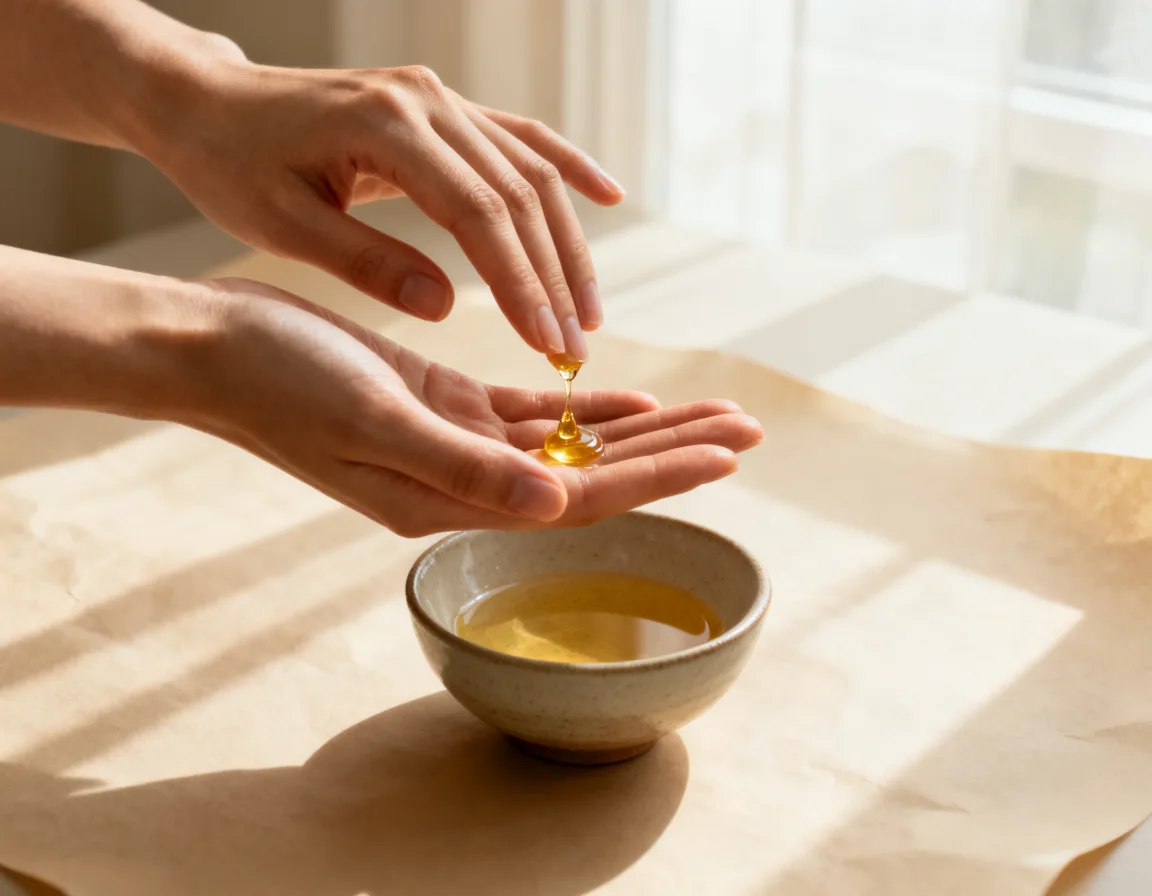
Most instructions for yoni oil fit in one sentence: put a few drops on your skin. That sentence is technically correct and practically useless. It skips the patch test that prevents nearly every bad first experience, says nothing about how much oil is actually enough, and — the part we care about most — never tells you when you should put the bottle down and not use it at all. This guide covers all of it: the preparation, the ritual itself, the dosage, the storage, and the honest list of situations where the right amount of yoni oil is zero.
If you are still deciding whether this product belongs in your routine at all, start with our honest guide to what yoni oil is — and is not. This article assumes you have a bottle in hand and want to use it well.
Before first use: the 48-hour patch test
Intimate skin is not the place to discover you react to an ingredient. Every new leave-on product — ours included, and we say this on every label — deserves a patch test on forgiving skin first.
Here is how to do it properly:
- Apply one drop to your inner forearm and gently rub it in. Do not wash the area.
- Wait a full 48 hours. Contact reactions are often delayed; a quick ten-minute check tells you almost nothing. If you see redness, itching, bumps or burning at any point, wash the area and do not use the product on intimate skin.
- Very sensitive skin? Test twice. If you have a history of eczema, fragrance sensitivity or reactive skin, repeat the same one-drop test behind your knee — the skin there is thinner and closer in character to the vulvar area — and wait another 48 hours before first intimate use.
Two days feels slow when a new bottle is sitting on the shelf. It is still faster than a week of irritated skin. Professional aromatherapy bodies recommend patch testing for exactly this reason [1] — and it matters even for an unscented oil, because any cosmetic can disagree with any individual.
The ritual, step by step
The whole practice takes three to five unhurried minutes. Morning works if you want lasting comfort under clothing through the day; evening after a shower is the classic choice, because warm, slightly damp skin takes oil beautifully and the ritual doubles as a wind-down. There is no wrong answer — consistency matters more than the clock.
- Cleanse gently. Wash the external intimate area with warm water — or, if you prefer a cleanser, a mild unscented one used on the outside only. Gynecologists are consistent on this point: the vulva needs far less soap than the wellness industry suggests, and the vagina needs none at all [2]. Pat dry with a soft towel; leaving the skin very slightly damp is fine and helps the oil spread.
- Dispense 2–3 drops into your palm. This is genuinely enough. Oil spreads much further than lotion, and a light layer that absorbs is more comfortable than a heavy one that transfers to underwear. You can always add one more drop; you cannot un-apply it.
- Warm the oil between your hands. Rub your palms together for a few seconds until the oil is body-temperature. Cold oil on intimate skin is an unpleasant surprise; warm oil is half the pleasure of the ritual.
- Apply to the external area only. Using your fingertips, smooth the oil over the vulva, the bikini line, and anywhere skin rubs against clothing — outer skin only, never internally. The vagina is a self-regulating ecosystem and does not want cosmetic oil in it, however natural the ingredients.
- Take a moment. A slow minute of gentle massage improves how evenly the oil absorbs — and it is the part of the practice people come to value most. If you use it as a dedicated massage oil rather than daily care, simply increase the amount (see the table below).
- Let it absorb before dressing. Give it two or three minutes. Grapeseed is one of the lighter carrier oils and sinks in fast, which is exactly why we built our formula on it.
A note on shaving and waxing: freshly depilated skin is covered in micro-abrasions and briefly more permeable than usual. Oil is excellent for this skin — but not immediately. Wait until any visible redness or stinging has fully settled, typically about a day, before applying. Applied then, a light oil layer helps reduce the friction that aggravates post-shave irritation.
How much and how often
The most common mistake is simple over-use. More oil does not moisturize more — it just sits on the surface. Here is what we actually recommend:
| Use case | Amount | Frequency |
|---|---|---|
| Daily care | 2–3 drops | Once daily, morning or evening |
| Massage | 4–6 drops | As desired |
| After shaving or waxing | 2–3 drops | Wait ~24 hours until irritation settles, then apply |
At daily-care amounts, a 30 ml bottle of The Original lasts roughly three to four months — a detail worth knowing both for your budget and for the storage advice below.
When NOT to use it
This is the section most brands leave out, and the one we think earns your trust. Skip the oil entirely in these situations:
- On broken or irritated skin. Cuts, fissures, razor burn that is still stinging, or any rash: compromised skin absorbs more of everything and reacts unpredictably. Let it heal first.
- When you have active symptoms. Itching, burning, unusual discharge or odor are medical signals, not dryness. A cosmetic oil cannot treat them, and applying anything over symptoms can mask them and delay real care. See a clinician first — the American College of Obstetricians and Gynecologists' guidance on vulvovaginal health is the standard we defer to [2].
- Before a gynecological appointment. Skip the oil for at least 24 hours before an exam. Residue on the skin can interfere with examinations and contaminate samples such as swabs or smears — a small courtesy to your clinician that keeps your results clean.
- With latex condoms. Oils degrade latex. In laboratory testing, oil exposure weakened latex condoms dramatically within minutes [3]. Plant oils are no exception to the rule: if latex (or polyisoprene) barriers are part of your evening, yoni oil is not. Apply it at a different time of day, or wash it off thoroughly first.
Storing your oil so it stays fresh
Plant oils are natural products and they oxidize. Grapeseed oil's high linoleic acid content is exactly what makes it so skin-compatible — linoleic acid is a structural component of the skin barrier itself [4] — but polyunsaturated oils are also the quickest to go stale if mistreated. Four habits keep the bottle at its best:
- Keep it in a dark, cool place — a drawer or cabinet, not a sunny windowsill or a steamy shower shelf.
- Close the cap promptly after each use; oxygen is the enemy.
- Use it within 12 months of the manufacture date printed on the packaging.
- Trust your nose: fresh grapeseed oil smells light and faintly nutty. If it ever smells sharp, waxy or like old paint, it has oxidized — retire it.
Common mistakes to avoid
- Skipping the patch test because the ingredient list "looks gentle". Natural is not a synonym for non-reactive.
- Using it internally. External means external — every reputable formulator agrees.
- Drenching the skin. Two or three drops, not ten. Excess oil transfers to underwear and can trap moisture against skin.
- Applying to freshly shaved skin while it is still stinging, instead of waiting for the irritation to settle.
- Oiling over symptoms. If something itches, burns or smells unusual, the next step is a clinician, not a cosmetic.
- Forgetting the latex rule — see above; it is the one mistake on this list with contraceptive consequences.
- Storing the bottle in sunlight and then wondering why the oil changed character by month six.
The bottom line
Used well, yoni oil is a three-minute ritual: clean skin, two or three warmed drops, external application, a moment of unhurried attention. Used carelessly — no patch test, over symptoms, alongside latex — it becomes a product working against you. If you take one thing from this guide, take the 48-hour patch test; it is the least glamorous step and the one that matters most. And if you are curious about what is actually in the bottle and why the essential oil percentage matters so much on this particular skin, our essential oil safety guide is the next read.
Sources
- National Association for Holistic Aromatherapy — Aromatherapy Safety Guidelines. naha.org
- American College of Obstetricians and Gynecologists — Vulvovaginal Health FAQ. acog.org
- Voeller B. et al. Mineral oil lubricants cause rapid deterioration of latex condoms. Contraception, 1989. PubMed
- Linus Pauling Institute, Oregon State University — Essential Fatty Acids and Skin Health. lpi.oregonstate.edu
Ready for the ritual?
The Original Yoni Oil — grapeseed, jojoba, vitamin E. Unscented, patch-test friendly, $39.