Yoni Oil Benefits: What the Research Actually Says
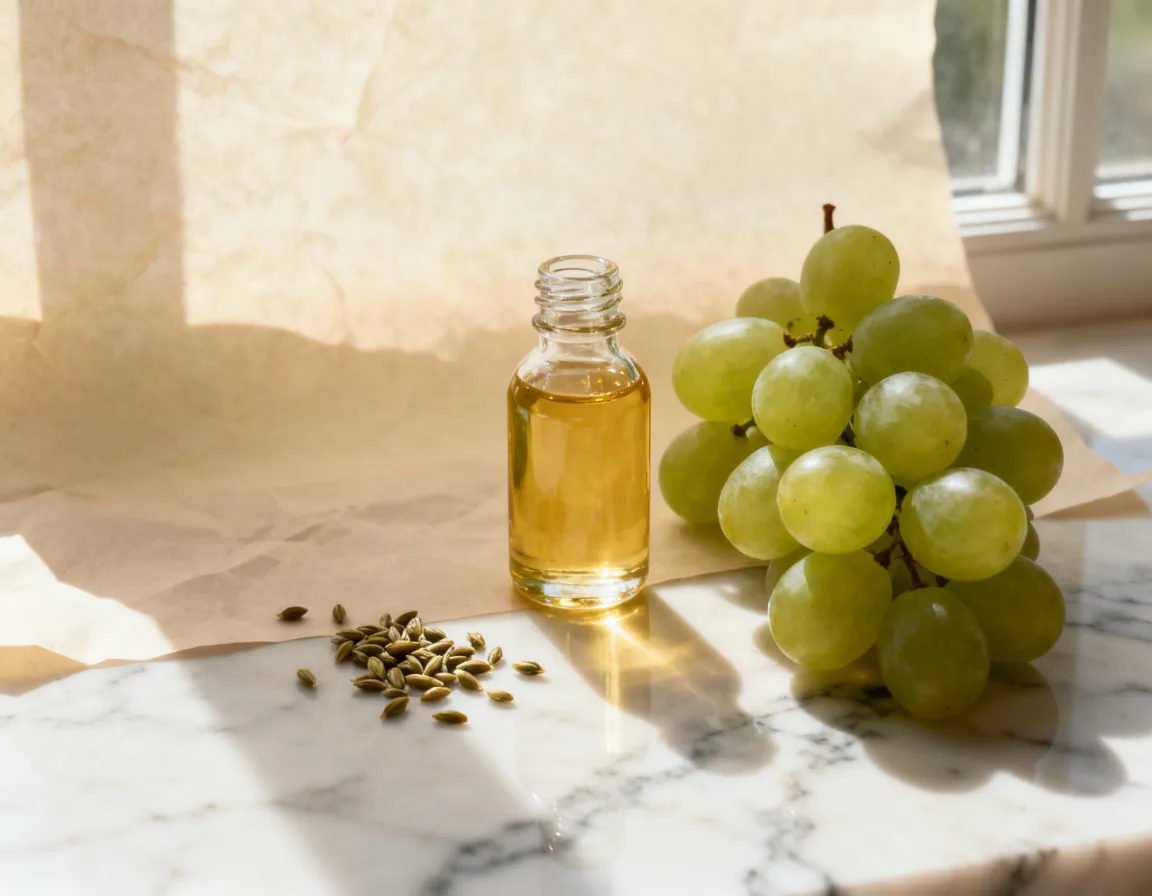
Search "yoni oil benefits" and you will find lists of ten, fifteen, twenty items — balanced pH, banished odor, detoxed womb, restored feminine energy, glowing confidence. We make yoni oil for a living, and we will tell you plainly: most of those lists are copied from one another, and most of the items on them do not survive contact with the evidence. What is left after honest pruning is a shorter list — but it is a real one, and we think a short true list beats a long false one every time.
This article walks through every major claimed benefit, explains what kind of evidence exists for each, and ends with a verdict table you can screenshot and hold any brand against — including us.
How to read cosmetic evidence
First, an honest framing. There are no large randomized controlled trials of yoni oil on vulvar skin. There almost certainly never will be: cosmetic oils are cheap, unpatentable and low-risk, so nobody funds that study. What we have instead is a hierarchy of indirect evidence, and knowing which tier a claim sits on is most of the work of reading it honestly:
- Randomized trials on other body areas. The strongest data we have. Plant oils have been tested in real RCTs — virgin coconut oil against mineral oil in children with atopic dermatitis, for example, where the coconut oil group showed greater improvement in disease scores and skin hydration [3] — just on arms, legs and torsos rather than vulvar skin. External vulvar skin is still skin, so these results are informative, but they are borrowed, not direct.
- Mechanistic and compositional studies. We know precisely what grapeseed oil contains — dominated by linoleic acid, with vitamin E and phenolic compounds [2] — and we know what linoleic acid does in the skin barrier [1]. Mechanism is real evidence, but a plausible mechanism is a hypothesis, not a proven outcome.
- Tradition and testimonial. Ayurvedic oiling rituals, grandmother wisdom, glowing reviews. This tier tells you a practice is pleasant, culturally meaningful and probably tolerable. It cannot tell you a practice works pharmacologically, because tradition has cheerfully endorsed plenty of things that don't.
With that ladder in hand, here is where each claimed benefit actually sits.
The benefits with real support
1. Moisturized, better-protected external skin
This is the core benefit, and it stands on the best evidence in the category. Plant oils are emollients: applied to skin, they smooth the surface and slow transepidermal water loss. Oils rich in linoleic acid bring something extra — linoleic acid is an essential fatty acid that the skin cannot synthesize, and it is a structural component of the ceramides that make the skin barrier waterproof. Deficiency shows up as scaling and increased water loss, and topical application of linoleic-acid-rich oils has been shown to correct those signs [1].
The choice of oil matters more than most brands admit. In a study by Danby and colleagues, adult volunteers applied olive oil to the forearm for four weeks — and it damaged the skin barrier, reducing stratum corneum integrity and inducing mild redness, while a high-linoleic sunflower seed oil preserved barrier function and improved hydration [4]. Two natural oils, opposite results. This single study is the best argument we know for two positions we hold: "natural" is not automatically good, and high-linoleic oils — grapeseed is among the richest [2] — are the sensible default for delicate skin. We chose our base because of this research; the full story is in our grapeseed deep-dive.
2. Softer, smoother skin texture
A modest claim, solidly supported. Emollients fill the microscopic gaps between corneocytes — the flattened cells of the skin surface — which is why oiled skin immediately feels smoother and looks less flaky. The coconut oil RCT mentioned above measured exactly this cluster of outcomes: hydration up, roughness and disease severity down over eight weeks of twice-daily application [3]. Skin that is shaved or waxed regularly, as much intimate skin is, benefits most: freshly bared skin loses water faster and feels rough sooner.
3. Less friction, more comfort
Unglamorous and true. External intimate skin lives a life of friction — waistbands, seams, workouts, cycling, thigh against thigh in a Vancouver summer. A thin layer of oil is a mechanical lubricant for skin-on-fabric and skin-on-skin contact. No trial is needed to establish that oil reduces friction; that is simply what oils do. The practical caveats: use it externally, and never combine any oil-based product with latex condoms, which oils degrade.
4. The ritual itself
Here we will defend a benefit that evidence-minded readers are sometimes too quick to throw out. Three unhurried minutes of warmth, scent and deliberate attention to a part of the body most of us treat with anxiety or avoidance — that is a genuinely valuable practice. It is a psychological good, not a pharmacological one, and we think the honest move is to name it as such rather than dress it up as "energy balancing."
The ritual is real. The relaxation is real. Neither one needs a fake mechanism to justify it.
The verdict table
Every claim we could find in the wild, graded. "Solid" means supported by trials on human skin (other body areas) plus mechanism. "Real, not pharmacological" means the benefit exists but lives in psychology, not dermatology. "No" means no plausible mechanism, or the claim actively conflicts with what is known.
| Claimed benefit | Evidence level | Our verdict |
|---|---|---|
| Moisturizes external skin | RCTs of plant oils on human skin; EFA mechanism [1][3] | Solid. The core claim, and the one we make. |
| Softer, smoother skin | Same trials; measured hydration and texture outcomes [3][4] | Solid — provided the oil is high-linoleic; olive oil showed the opposite [4]. |
| Friction comfort (chafing, post-shave) | Basic physics of lubrication; no trial required | Solid. Modest, mechanical, real. |
| Relaxation, ritual, body connection | Experiential; not a drug effect | Real, not pharmacological. Worth having on its own terms. |
| "Balances vaginal pH" | Contradicted by mechanism: pH is set internally by the lactobacilli of the vaginal microbiome [6] | No. An external oil cannot regulate internal pH, and nothing cosmetic should go inside. |
| "Treats odor or infection" | None; symptoms signal medical conditions [5] | No. Persistent odor, itch or discharge needs a clinician. Masking symptoms delays care. |
| "Detoxes the womb" | No mechanism exists or is proposed | No. The uterus is self-maintaining. This is marketing language, full stop. |
What we tell our customers
When someone writes to ask "what will this actually do for me?", this is the answer, unabridged:
- It will moisturize and soften the external intimate area, the same way a good facial oil treats your face — and because the base is high-linoleic grapeseed, it does so with the fatty acid your skin barrier is actually built from.
- It will make shaved or waxed skin more comfortable and reduce everyday friction.
- It will give you a small, pleasant ritual — three minutes that are entirely yours.
- It will not change your pH, treat any condition, or detox anything. If something itches, burns, smells unusual or worries you, see a clinician first [5] — the oil will still be here afterwards.
If that honest list sounds like what you were looking for, start with the unscented Original Yoni Oil — grapeseed, jojoba and vitamin E, nothing else. If you are still deciding whether the category is for you at all, our guide What Is Yoni Oil? covers the tradition, the safety rules and how to judge any label, and the science behind our base oil explains why the carrier matters more than the marketing.
Sources
- Linus Pauling Institute, Oregon State University — Essential Fatty Acids and Skin Health. lpi.oregonstate.edu
- Garavaglia J. et al. Grape Seed Oil Compounds: Biological and Chemical Actions for Health. Nutrition and Metabolic Insights, 2016. PMC
- Evangelista M.T. et al. The effect of topical virgin coconut oil on SCORAD index, transepidermal water loss, and skin capacitance in mild to moderate pediatric atopic dermatitis: a randomized, double-blind, clinical trial. International Journal of Dermatology, 2014. PubMed
- Danby S.G. et al. Effect of olive and sunflower seed oil on the adult skin barrier: implications for neonatal skin care. Pediatric Dermatology, 2013. PubMed
- American College of Obstetricians and Gynecologists — Vulvovaginal Health FAQ. acog.org
- Ravel J. et al. Vaginal microbiome of reproductive-age women. PNAS, 2011. PubMed
The short true list, bottled
The Original Yoni Oil — grapeseed, jojoba, vitamin E. Unscented, $39.