What Is Yoni Oil? An Honest, Evidence-Informed Guide
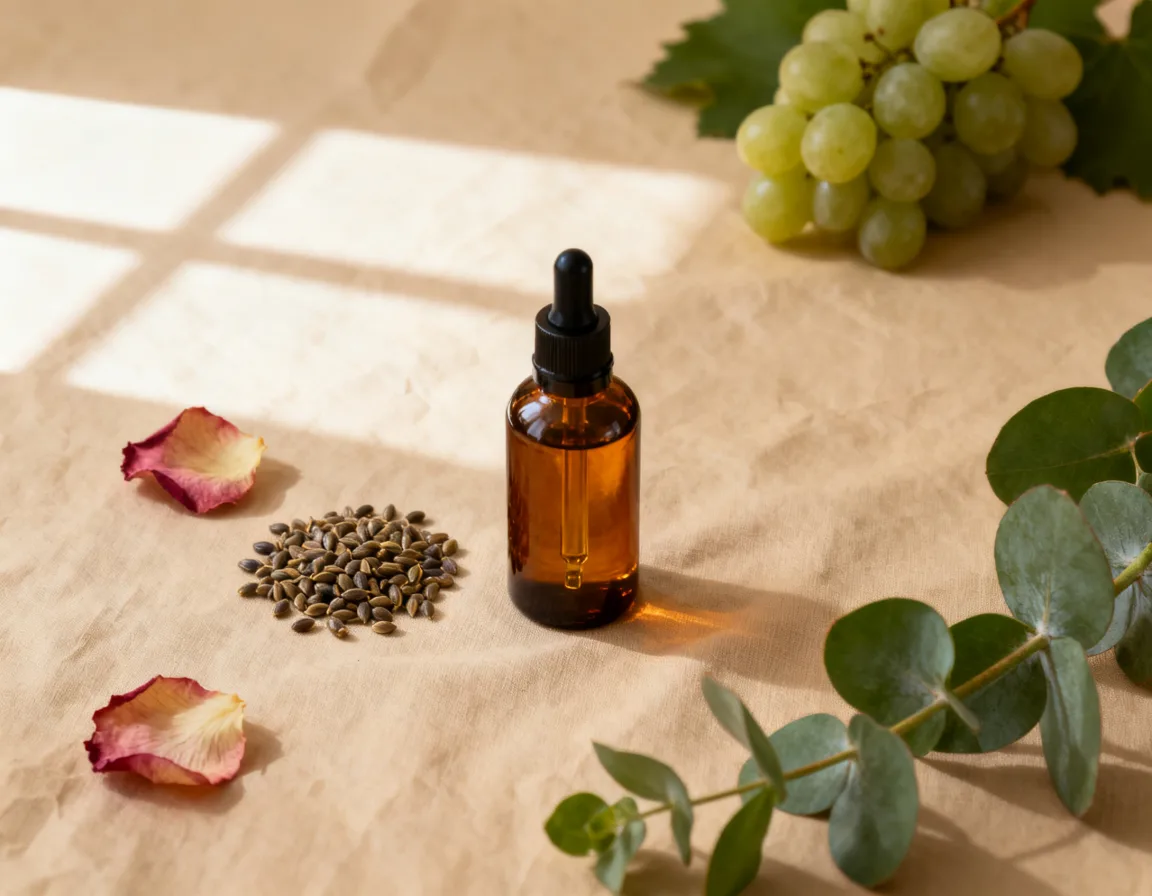
Type "yoni oil" into a search bar and you will find two internets. One promises that a blend of plant oils will balance your pH, detox your womb and change your life. The other dismisses the whole category as pseudoscience. As a company that makes yoni oil, we think you deserve a third option: a plain description of what this product actually is, where the tradition comes from, what published research supports — and what it does not.
The short answer
Yoni oil is a cosmetic body oil formulated for the external intimate area — the vulva, the bikini line, the surrounding skin. A well-made one is simply a gentle carrier oil (in our case cold-pressed grapeseed oil), sometimes with a low concentration of essential oils for scent, used to moisturize skin and as part of a self-care or massage ritual.
"Yoni" (योनि) is a Sanskrit word meaning womb, source, or sacred space. In tantric and ayurvedic traditions it refers to the vulva with an attitude of reverence rather than shame — which is precisely the framing the modern products borrow.
Yoni oil is a moisturizer and a ritual. It is not a medicine, and anyone who sells it as one is overselling it.
Where the tradition comes from
Oiling the body is one of the oldest recorded care practices. Ayurveda describes abhyanga — full-body self-massage with warm oil — as a daily ritual, and classical texts discuss oils prepared for virtually every part of the body. Across the Mediterranean, olive oil served the same everyday role for skin and hair.
The modern "yoni oil" category is younger: it emerged from the wellness movement of the last two decades, which paired the Sanskrit vocabulary with contemporary cosmetic formulation. That lineage is worth being honest about — the bottle on your shelf is a modern product inspired by an old attitude, not an ancient recipe handed down unchanged.
What yoni oil can actually do
Stripped of marketing, a good yoni oil does three things, and does them well:
- Moisturizes external skin. Plant oils are emollients: they soften skin and slow water loss from its surface. Oils rich in linoleic acid — grapeseed among the richest — supply a fatty acid that is a structural component of the skin barrier itself [1].
- Reduces friction. For external massage, after shaving or waxing, or where skin rubs against clothing, an oil is a simple mechanical comfort.
- Anchors a ritual. Three unhurried minutes of deliberate self-care is a real psychological good, even though it is not a pharmacological one. We think that is reason enough — no exaggeration required.
What yoni oil cannot do
This is the part most brands skip. The table below summarizes the most common marketing claims and what the evidence actually says.
| Common claim | What the evidence says |
|---|---|
| "Balances vaginal pH" | Vaginal pH is maintained internally by the vaginal microbiome — chiefly lactobacilli producing lactic acid [2]. An oil applied to external skin does not regulate it. No cosmetic oil should be used internally. |
| "Detoxes the womb" | No cosmetic can "detox" any organ; this is marketing language with no physiological mechanism. The uterus and vagina are self-maintaining. |
| "Treats infections or odor" | Persistent odor, itching or discharge are medical symptoms. They need a clinician, not a cosmetic — and oiling over symptoms can delay real care [3]. |
| "Moisturizes and softens external skin" | True — this is exactly what emollient plant oils do, and the one claim we make. |
Safety rules that actually matter
Yoni oil is low-risk when it is made and used sensibly. Four rules cover most of it:
- External use only. The vagina is a self-cleaning ecosystem; introducing oils internally can disturb its microbiome. Every reputable formulator says the same thing.
- Patch test first. Apply a drop to your inner forearm, wait 48 hours. Sensitive users can repeat the test behind the knee before first intimate use. Our ritual guide walks through this.
- Mind the condoms. Oil-based products degrade latex: in laboratory testing, mineral-oil exposure reduced latex condom strength dramatically within minutes [4]. Plant oils are gentler but the rule stands: do not combine any oil with latex or polyisoprene barriers.
- Respect essential oil dilution. For leave-on intimate products, we keep total essential oils at or below 1% — and our unscented Original contains none. More on dilution mathematics in our essential oil safety guide.
How to choose a good yoni oil
Five things to check on any label — ours included:
- A named carrier oil you recognize (grapeseed, jojoba, sweet almond), not just "botanical blend".
- A full INCI list. If a brand won't tell you exactly what is inside, walk away.
- Stated essential oil dilution — or an unscented option for sensitive skin.
- No medical promises. A brand that claims to treat infections is either careless or dishonest; neither belongs near your skin.
- Honest packaging: dark glass (oils oxidize in light), a batch or manufacture date, and a shelf life.
Our whole range is built on one grapeseed base with five characters — from the unscented Original to rose, vetiver, lavender and ylang-ylang infusions. If you are comparing textures, our oil vs. butter guide covers the difference.
The bottom line
Yoni oil is a well-made moisturizer for external intimate skin, wrapped in a ritual worth keeping. Enjoy it for what it is; be skeptical of anyone selling it as more. And for anything that itches, burns, smells unusual or worries you — see a clinician first. That advice costs us sales and we will keep giving it, because the alternative is the kind of brand we set out not to be.
Sources
- Linus Pauling Institute, Oregon State University — Essential Fatty Acids and Skin Health. lpi.oregonstate.edu
- Ravel J. et al. Vaginal microbiome of reproductive-age women. PNAS, 2011. PubMed
- American College of Obstetricians and Gynecologists — Vulvovaginal Health FAQ. acog.org
- Voeller B. et al. Mineral oil lubricants cause rapid deterioration of latex condoms. Contraception, 1989. PubMed
- Garavaglia J. et al. Grape Seed Oil Compounds: Biological and Chemical Actions for Health. Nutrition and Metabolic Insights, 2016. PMC
Start where we started
The Original Yoni Oil — grapeseed, jojoba, vitamin E. Unscented, $39.