Vulvar Skin Care 101: pH, Cleansing and Moisture
The vulva has its own rules, and most "feminine hygiene" marketing ignores every one of them. Entire shelves of scented washes, deodorant sprays, wipes and douches exist to solve a problem — that this part of the body is somehow unclean — which physiology never had. The result is an aisle that causes more irritation than it prevents. This guide is the opposite of that aisle: a calm walk through what vulvar skin actually is, how its chemistry works, how to clean it, when moisture genuinely helps, and — most importantly — which symptoms mean you should close this tab and book a clinician instead. We sell a cosmetic body oil, so read our advice with that in mind; you will notice that a lot of it amounts to "buy less, not more".
Vulva vs. vagina — and why the difference matters
The two words get used interchangeably, but they name different structures with opposite care rules.
The vulva is everything external: the mons, the outer and inner labia, the clitoral hood, the vestibule and the surrounding skin. It is skin — specialized, more permeable and more sensitive than the skin on your arm, but skin — and like other skin it can be gently washed and, when dry, moisturized.
The vagina is the internal canal. It is not skin and it is not something you care for with products. It is a self-maintaining ecosystem: it cleans itself through normal discharge, and its microbial community keeps it in balance without help. The American College of Obstetricians and Gynecologists is unambiguous on the practical consequence: do not douche. Douching does not "clean" the vagina — it disrupts the very community that protects it, and it is associated with a higher risk of vaginal infections [1]. Nothing cosmetic — no wash, no steam, no oil, ours included — belongs inside the vaginal canal.
Almost every mistake the hygiene aisle encourages comes from collapsing this distinction: treating a self-cleaning internal organ like dirty external skin, and treating delicate external skin like it needs perfume.
pH, explained without the marketing
"pH-balanced" is printed on half the products in the aisle, so it is worth knowing what the numbers actually are. pH measures acidity on a scale of 0–14; lower is more acidic; 7 is neutral. Three zones matter here:
| Area | Typical pH | What maintains it |
|---|---|---|
| Vagina (premenopause) | ≈ 3.8–5.0 | Lactobacilli producing lactic acid; in a landmark microbiome study of 396 women, most communities were dominated by Lactobacillus species and median pH varied by community type within roughly this range [2] |
| Vulvar skin | ≈ 4.7–5.5 | The skin's own acid mantle — sebum, sweat and resident flora — slightly less acidic than the vagina, slightly more variable than body skin |
| General body skin | ≈ 5.5 | The same acid mantle; ordinary soaps (pH 9–10) push it alkaline, which is why they can leave skin tight and irritated |
Two honest conclusions follow. First, vaginal pH is maintained internally, by microbes — no external product regulates it, and any cosmetic claiming to "balance your pH" is selling a mechanism it does not have. Second, the practical lesson for external skin is modest: avoid harsh alkaline soaps and fragrant detergents on the vulva, because they strip an acid mantle that was doing its job perfectly well. That is the entire useful content of "pH-balanced", and water alone satisfies it.
Cleansing: less is the whole trick
ACOG's guidance on vulvar care is almost anticlimactically simple: wash the external area with water, or with a mild, unfragranced cleanser if you prefer one, and skip the rest [1]. In practice:
- Warm water is enough for most people, most days. Use your hand rather than a rough washcloth, and pat — don't rub — dry with a clean cotton towel.
- If you use a cleanser, choose a mild, unscented, non-soap formula, use a small amount on external skin only, and rinse thoroughly. Nothing needs to go inside.
- Skip scented wipes, deodorant sprays and washes. Fragrance is among the most common contact allergens, and the vulva is more permeable than most body skin — a bad combination. A healthy vulva is not supposed to smell like a meadow.
- Never douche. Worth repeating, because the products are still sold: the vagina cleans itself, and douching is associated with harm, not hygiene [1].
- Once or twice a day is plenty. Over-washing strips the acid mantle and creates the dryness and irritation people then buy more products to fix.
Moisture: when external skin genuinely needs help
Sometimes external vulvar skin runs dry — after shaving or waxing, in chlorinated pools, through dry winter air, with over-washing, or simply with hormonal shifts across life. For external dryness of that everyday kind, the same logic applies as anywhere else on the body: an emollient. Plain plant oils are emollients — they soften skin and slow water loss from its surface, and oils rich in linoleic acid supply a fatty acid that is a structural component of the skin barrier itself [3].
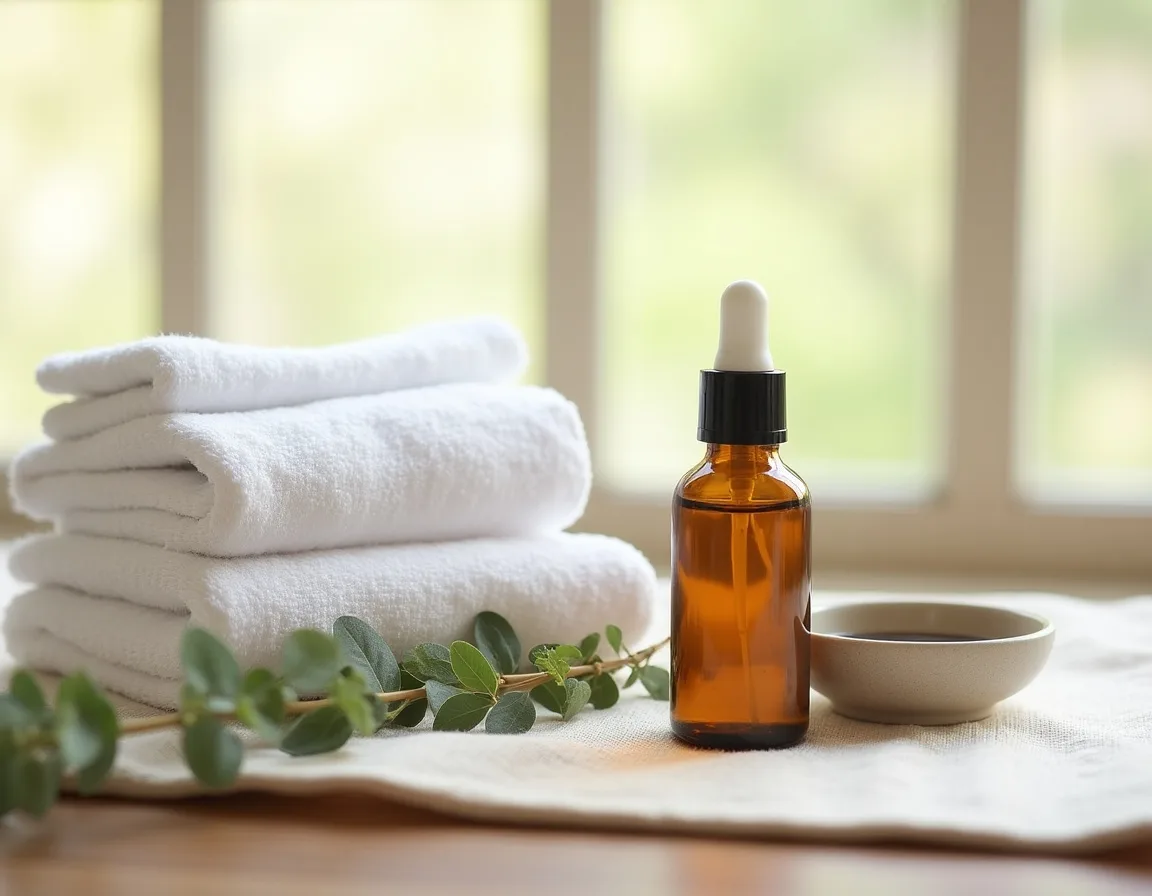
This is the honest place our own product lives. A well-made yoni oil is exactly that — a gentle carrier oil, in our case grapeseed with jojoba and vitamin E, applied to external skin for moisture, post-shave comfort and ritual. What it is not: a treatment for any condition, a pH regulator, or anything to use internally. If your product contains essential oils, dilution matters — for leave-on intimate use we stay at or below 1%, in line with conservative aromatherapy safety practice [4]; our essential oil safety guide covers the numbers, and the fully unscented Original exists precisely for skin that wants no fragrance at all. Patch test any new product on your inner forearm first, and keep every oil away from latex barriers.
One boundary we want to draw clearly: dryness that is persistent, painful, or accompanied by itching or discharge is not a cosmetic situation. Vaginal (internal) dryness, dryness with menopause-related symptoms, or dryness that makes sex painful deserve a clinician's assessment — there are effective medical options, and a body oil is not one of them.
Clothing and habits that quietly help
Most vulvar comfort is decided by boring daily mechanics, not by products:
- Breathable cotton underwear for everyday wear; save synthetics for the gym and change afterward.
- Change out of wet swimwear and sweaty leggings promptly. Warm, damp, airless environments are exactly what irritated skin and yeast enjoy.
- Go easy on hair removal, and care for skin afterward. Shave with a clean, sharp razor along a warm, lathered surface; afterwards, a fragrance-free emollient calms friction. Waxing and sugaring deserve the same gentle aftercare — and a day's break before pools or tight clothing.
- Wash new underwear before wearing and use unscented laundry detergent if you notice irritation; residues sit against this skin all day.
- Sleep is ventilation. Loose sleepwear — or none — gives skin hours of dryness and airflow for free.
Red flags: when to stop shopping and see a clinician
This section is the most important one on the page, and it is the one no product can replace. Cosmetics — ours included — cannot diagnose or treat anything, and using them to mask a symptom can delay care that actually works. See a clinician promptly if you notice:
- Itching or burning that persists more than a few days, keeps returning, or is intense;
- A change in discharge — unusual color, texture or amount — or an unusual or strong odor;
- Lumps, sores, warts, blisters or thickened patches of vulvar skin, or a mole that changes;
- Bleeding outside your period or after sex;
- Pain — with sex, with urination, or ongoing vulvar pain with no visible cause;
- Any symptom during pregnancy, which always lowers the threshold for calling your provider.
None of these mean something terrible; most have mundane, very treatable explanations. But every one of them is a medical question, not a hygiene question [1]. A brand that suggests its wash, oil or steam can handle any item on this list is a brand to walk away from — and yes, that standard applies to us. If you are symptomatic, we would honestly rather you spend the money on a clinic visit than on our shelf.
The one-paragraph version
The vulva is external skin: wash it with water or a mild unfragranced cleanser, keep fragrance and wipes away, and moisturize with a plain emollient when it runs dry. The vagina is internal and self-cleaning: put nothing in it, and never douche. pH is maintained by your own microbiome, not by products. Cotton, dry clothes and gentle hair-removal aftercare do more than anything in a bottle. And symptoms — itching, burning, unusual discharge or odor, lumps, bleeding, pain — go to a clinician first, every time. That is the whole regimen. Everything else is marketing.
Sources
- American College of Obstetricians and Gynecologists — Vulvovaginal Health FAQ. acog.org
- Ravel J. et al. Vaginal microbiome of reproductive-age women. PNAS, 2011. PubMed
- Linus Pauling Institute, Oregon State University — Essential Fatty Acids and Skin Health. lpi.oregonstate.edu
- National Association for Holistic Aromatherapy — Aromatherapy Safety Guidelines. naha.org
If you moisturize, keep it simple
The unscented Original Yoni Oil — grapeseed, jojoba, vitamin E. External use, $39.